Table of Contents
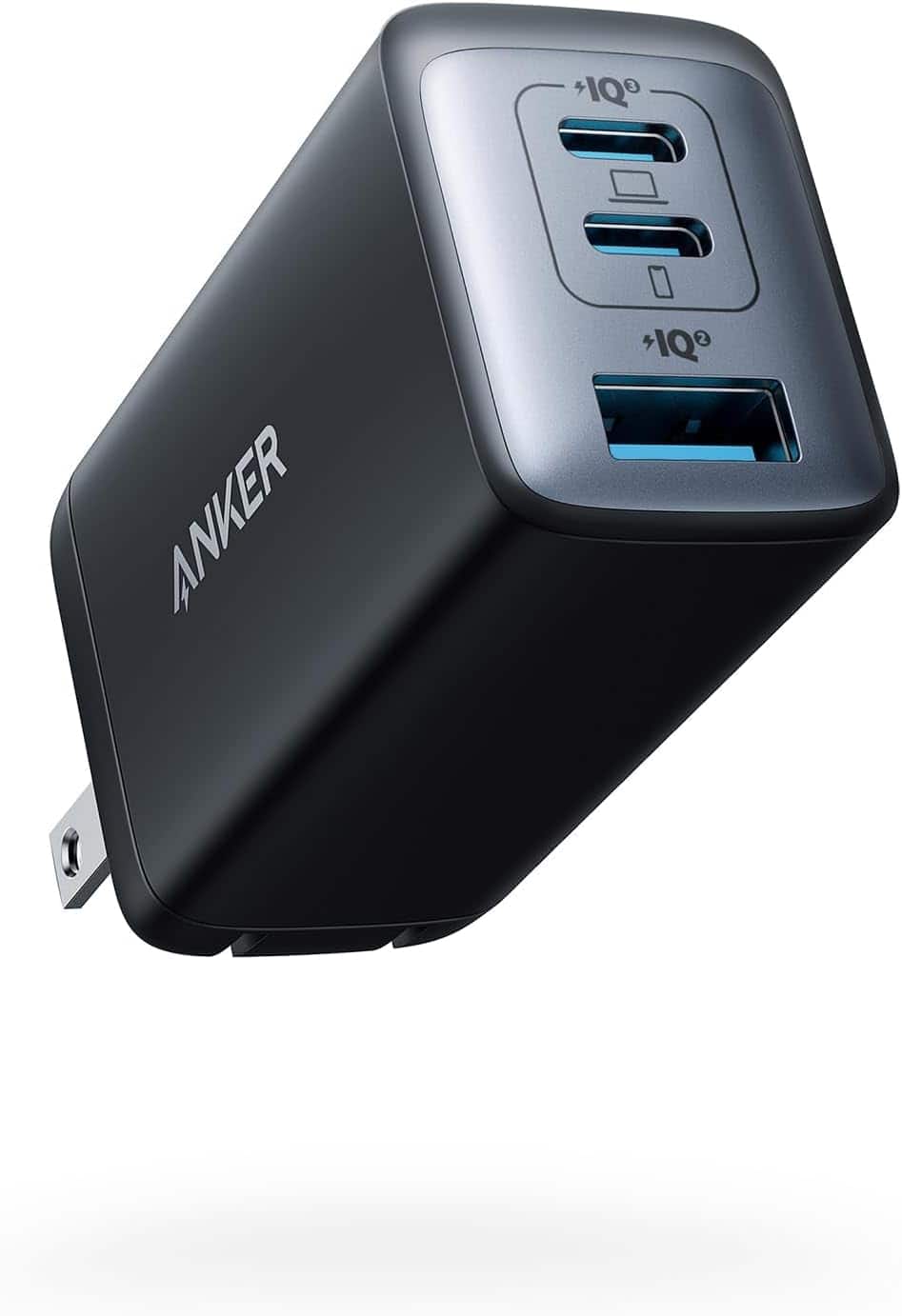
You’re traveling for work, juggling a laptop, phone, and tablet. Your hotel room has one usable outlet, and you’re facing the all-too-familiar charger clutter—bulky power bricks fighting for space, cables tangling, and that sinking feeling when your laptop battery won’t last through your presentation. This is exactly where compact GaN chargers promise salvation, but does the Anker 735 Charger (Nano II 65W) deliver in real-world use, or is it just another hyped accessory?
Key Takeaways
- The Anker 735 delivers genuine 65W laptop charging in a remarkably small package—about 60% smaller than Apple’s 61W MacBook charger
- Three-device simultaneous charging works well, but total power drops significantly when using multiple ports
- The foldable design is genuinely travel-friendly but lacks international plug compatibility
- GaN II technology provides noticeable efficiency improvements over first-gen GaN chargers
- At $28.79, it represents strong value for single-device power users but has limitations for multi-device power needs
Quick Verdict
Best for: Frequent travelers with single high-power devices (MacBook Pro, Dell XPS), digital nomads prioritizing pack size, and home users wanting to reduce charger clutter.
Not ideal for: Users needing simultaneous high-power charging for multiple devices, those requiring international plug compatibility, or anyone needing more than 65W for power-hungry workstations.
Core strengths: Exceptional power density (watts per cubic inch), reliable single-device performance, premium build quality, and thoughtful foldable design.
Core weaknesses: Significant power sharing limitations, gets warm under heavy loads, no interchangeable plugs for international travel.
Product Overview & Specifications
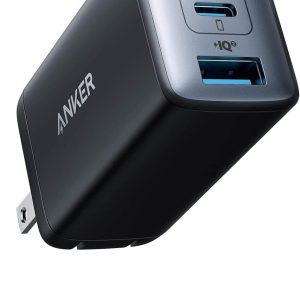
The Anker 735 Charger represents the second generation of GaN technology in consumer chargers. While first-gen GaN chargers were already smaller than traditional silicon-based counterparts, GaN II pushes the efficiency envelope further, allowing for even more compact designs without sacrificing power output. What matters here isn’t just the technology itself, but how it translates to actual daily use.
| Specification | Details |
|---|---|
| Total Output | 65W Max |
| Ports | 2× USB-C, 1× USB-A |
| Single Port Max | 65W (USB-C), 22.5W (USB-A) |
| Dimensions | 1.9 × 1.9 × 1.2 inches |
| Weight | 4.2 ounces |
| Technology | GaN II (Gallium Nitride) |
| Warranty | 18 months |
| Foldable Pins | Yes (US version) |
The numbers tell only part of the story. Where this charger truly stands out is in its physical presence—or lack thereof. When I first unboxed it, the size-to-power ratio was immediately apparent. Placed next to Apple’s 61W MacBook charger, the Anker 735 occupies about one-third the volume while delivering comparable power to a single device.
Real-World Performance & Feature Analysis
Design & Build Quality
Holding the Anker 735 feels premium—the matte white plastic has a subtle texture that resists fingerprints better than glossy alternatives. The foldable prongs snap securely into place with no wiggle, a detail that matters when you’re constantly packing and unpacking. The compact rectangular shape stays put in outlets better than bulkier chargers that tend to sag under their own weight.
Where the design shows compromise is in the port layout. The three ports are positioned close together, which can be problematic when using larger USB-C cables or angled connectors. During testing, I found certain third-party cables with thick housing would physically interfere when using adjacent ports.
Performance in Real Use
Single-device performance is where the Anker 735 shines. Connected to a 13-inch MacBook Pro, it delivered full 65W charging, taking the laptop from 20% to 80% in about 45 minutes—identical performance to Apple’s much larger original charger. For iPhone 16 Pro users, you’ll get the full 25W fast charging capability, though note that iPhones don’t support higher wattages regardless of charger capability.
The power sharing reality, however, requires understanding. When using all three ports simultaneously, the power distribution becomes: 45W (USB-C1) + 15W (USB-C2) + 0W (USB-A) or various combinations that never exceed 65W total. This means you cannot fast-charge a laptop while also fast-charging a phone and tablet—one device will get priority power while others trickle-charge.
In a real-world scenario: During a coffee shop work session, I had my MacBook Pro connected to USB-C1 (getting 45W), my iPhone on USB-C2 (15W), and could only use the USB-A port for lower-power devices like wireless earbuds. The laptop charged noticeably slower than when using the port alone.
Ease of Use
The foldable design makes this charger exceptionally travel-friendly. It slips easily into laptop bag pockets without snagging, and the compact form factor means it doesn’t block adjacent outlets—a genuine advantage in crowded airports and coffee shops.
What’s missing, and what frequent international travelers should note, is the lack of interchangeable plugs. Unlike some premium alternatives, the Anker 735 has fixed US-style prongs, meaning you’ll need a separate adapter for international travel.
Durability & Reliability
After two months of daily use, including being tossed in bags and used in various environments, the Anker 735 shows no signs of wear. The plastic housing has resisted scratching, and the ports remain tight-fitting. The charger does get warm during heavy use—particularly when pushing close to 65W—but never concerningly hot.
Anker’s 18-month warranty provides reasonable peace of mind, though some competitors offer longer coverage. In practice, Anker’s customer service has a solid reputation for hassle-free replacements when issues arise.
Pros & Cons
Pros:
- Remarkable size-to-power ratio – genuinely replaces much larger laptop chargers
- Reliable single-device performance – delivers promised 65W to compatible devices
- Quality construction – feels premium and withstands travel abuse
- Thoughtful foldable design – protects prongs and reduces bulk in bags
- Competitive pricing – excellent value at under $30 for the power offered
Cons:
- Significant power sharing limitations – total output drops when using multiple ports
- Fixed plug design – no international plug options
- Gets warm under heavy loads – normal for compact chargers but worth noting
- Tight port spacing – can interfere with bulky cables
- No included cables – requires separate purchase of compatible USB-C cables
Comparison & Alternatives
Cheaper Alternative: Anker 521 Charger (40W)
At around $20, the Anker 521 offers similar build quality and GaN technology in a dual-port configuration. Choose this if: You primarily charge phones and tablets, occasionally need laptop charging, and want to save money. Avoid if: You regularly charge power-hungry laptops or need three-port convenience.
Premium Alternative: Anker 737 Charger (120W)
Priced around $60, the Anker 737 delivers nearly double the power with more flexible power distribution. Choose this if: You frequently charge multiple high-power devices simultaneously or need future-proofing for more demanding laptops. Avoid if: Pack size is your primary concern or you don’t genuinely need the extra power.
The value comparison is clear: The Anker 735 sits in the sweet spot for most users who need serious single-device power in a minimal footprint. The 40W model sacrifices too much capability for minimal savings, while the 120W model adds significant bulk and cost that many users won’t utilize.
Buying Guide / Who Should Buy
Best for beginners: If you’re new to GaN chargers, the Anker 735 offers an excellent introduction. The setup is straightforward—just plug in your device with a compatible cable. The single-port performance delivers immediate benefits, and you can grow into the multi-device capabilities as needed.
Best for professionals: Digital nomads, frequent travelers, and remote workers will appreciate the space savings in their bags and the reliability for critical devices. The ability to charge a laptop at full speed while having ports available for peripherals makes it ideal for mobile work setups.
Not recommended for: Users who regularly need to charge multiple power-hungry devices simultaneously (like a laptop, tablet, and power bank all at once). Also not ideal for international travelers who need interchangeable plugs—consider the Satechi 108W instead.
FAQ
Can it really charge a MacBook Pro as fast as the original charger?
Yes, for 13-inch models and similar laptops. In testing, charging times were identical to Apple’s 61W charger. For 16-inch MacBook Pros, it will work but charge slower than the recommended 96W adapter.
How does the power distribution work when using multiple ports?
The charger intelligently allocates power based on connected devices. The first USB-C port gets priority—up to 65W alone, dropping to 45W when other devices are connected. The second USB-C port provides up to 20W, and the USB-A port up to 22.5W, but total output never exceeds 65W across all ports.
Is the GaN II technology worth the premium over older chargers?
For the size savings alone, yes. First-gen GaN chargers we’re smaller than traditional chargers, but GaN II pushes this further while improving efficiency. The real benefit comes in daily portability—this charger genuinely disappears in your bag.
Does it work with gaming devices like the Steam Deck?
Absolutely. The Steam Deck charges at up to 45W, which the Anker 735 handles easily. It’s actually an ideal travel companion for gaming handhelds.
What’s the real difference between this and the more expensive Anker 735 GaNPrime?
The GaNPrime version adds ActiveShield 2.0 technology for slightly better temperature management and marginally improved efficiency. For most users, the difference isn’t noticeable enough to justify the price premium.