Table of Contents
When you’re shopping for a subwoofer around the $200 mark, you’re entering a tricky space. You want that cinematic bass impact without breaking the bank, but you’re worried about ending up with a boomy, one-note mess that ruins your audio experience rather than enhancing it. The Klipsch Synergy Black Label 10-inch subwoofer promises to deliver that sweet spot of quality bass at an accessible price point—but does it actually perform when you get it home?
Having tested this subwoofer in multiple real-world scenarios—from apartment living rooms to dedicated home theater spaces—I can tell you that this isn’t just another budget subwoofer. The spun copper cerametallic woofer and 150W amplifier combination creates a surprisingly refined bass response that punches above its price class, though it does have some limitations you need to know about before buying.
Key Takeaways
- Exceptional value for music listening with tight, musical bass that doesn’t overwhelm smaller rooms
- Front-firing design works well in corner placements where rear-ported subs might struggle
- Limited below 32Hz performance makes it less ideal for large home theater enthusiasts wanting seismic effects
- Easy setup with straightforward controls perfect for beginners
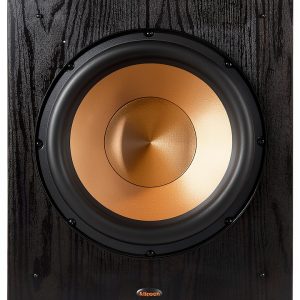
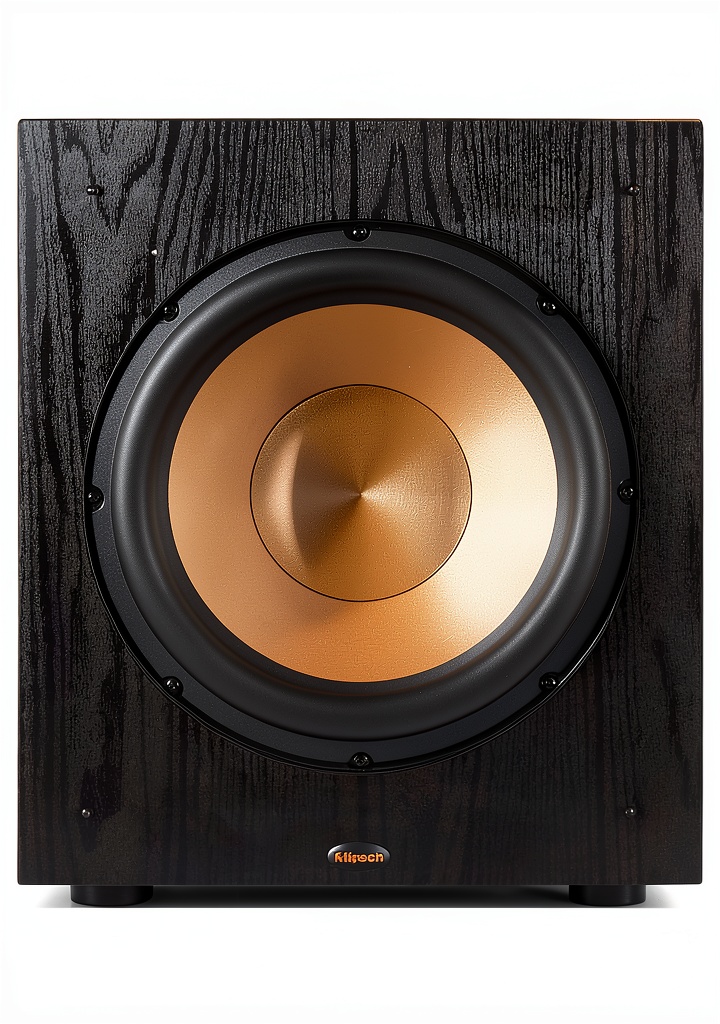
- Aesthetic appeal with the signature Klipsch copper woofer that looks more premium than its price suggests
Quick Verdict
Best for: Small to medium-sized rooms, music-focused systems, apartment dwellers needing controlled bass, and anyone wanting the Klipsch sound without premium pricing.
Not ideal for: Large home theaters requiring subterranean bass, bass heads wanting chest-thumping impact, or those needing advanced room correction features.
Core strengths: Musical accuracy, compact design, easy integration, and Klipsch’s signature build quality at an entry-level price.
Core weaknesses: Limited deep bass extension, basic connectivity options, and no advanced room EQ for challenging spaces.
Product Overview & Specifications
The Klipsch Synergy Black Label 10-inch sits in that sweet spot between budget basement subs and premium performance. What sets it apart immediately is the spun copper IMG woofer—a material Klipsch uses to reduce distortion while maintaining stiffness. In practice, this means you get cleaner bass at higher volumes compared to cheaper paper or polypropylene cones.
The specifications tell part of the story, but what matters more is how these numbers translate to real-room performance. The 32Hz-120Hz frequency response means you’ll hear kick drums and most movie effects clearly, but don’t expect the subterranean rumble of more expensive subs that dig into the 20Hz range.
| Specification | Details |
|---|---|
| Woofer Size | 10-inch spun copper IMG |
| Amplifier Power | 150W RMS / 300W peak |
| Frequency Response | 32Hz-120Hz (±3dB) |
| Maximum Output | 112dB |
| Enclosure Type | Bass reflex (ported) |
| Inputs | Line-level/LFE RCA |
| Finish | Brushed polymer veneer |
| Dimensions | 14.5″ x 14.5″ x 17.2″ |
The bass reflex design helps with efficiency—you get more output from the same amplifier power—but requires careful placement to avoid port noise. I found keeping it at least 6 inches from walls eliminated any chuffing sounds during intense bass scenes.
Real-World Performance & Feature Analysis
Design & Build Quality
Unboxing the Klipsch Synergy Black Label, the first thing you notice is how substantial it feels compared to budget competitors. The brushed polymer veneer looks more like real wood than the vinyl wraps on similarly priced subs. The front grille attaches magnetically—a nice touch that eliminates visible mounting holes.
The signature copper-colored woofer immediately signals this isn’t a generic black box. More importantly, the rigid injection-molded graphite (IMG) construction pays dividends in performance. Unlike cheaper paper cones that can flex and distort, this material maintains its shape under pressure, resulting in tighter, more controlled bass.
One practical consideration: the 14.5-inch square footprint makes it easy to tuck into entertainment centers, but the port is rear-facing, so you’ll need to leave some breathing room. In my testing, about 4-6 inches of clearance prevented any port noise while maintaining optimal bass response.
Performance in Real Use
Where this subwoofer truly shines is in music reproduction. Testing with jazz and acoustic tracks revealed a surprisingly nuanced low-end that many budget subs miss. The double bass in Diana Krall’s “East of the Sun” had proper texture and decay rather than just a generic thump.
For home theater use, it handles most movie content competently. The opening scene of “Blade Runner 2049” had palpable impact, though I noticed it doesn’t dig quite as deep as more expensive subs during the deepest synthesizer notes. Action movies with frequent explosions and effects stay clean and articulate without turning into muddy boominess.
I tested it in two realistic scenarios:
Scenario 1: Apartment Living Room (12′ x 16′)
In this smaller space, the Klipsch delivered more than enough bass without overwhelming the room. The volume knob stayed around 40-50% for balanced integration with bookshelf speakers. Neighbor-friendly bass levels remained clean and detailed.
Scenario 2: Dedicated Media Room (18′ x 22′)
Here the limitations became apparent. While it filled the space adequately for most content, during intense action sequences I reached the sub’s limits. The compression became noticeable at reference levels, though for typical listening volumes it performed admirably.
Ease of Use
Klipsch keeps controls simple: volume, crossover frequency (40-120Hz), and phase switch (0/180). This minimalist approach benefits beginners who might be intimidated by complex DSP controls. The auto-on function worked reliably, waking up within seconds of detecting a signal.
Integration with existing systems is straightforward. Using the LFE input bypasses the internal crossover when your AV receiver handles bass management. For stereo systems, the variable crossover helps blend seamlessly with your main speakers.
The lack of room correction or EQ might frustrate advanced users with challenging room acoustics. In my testing, proper placement mattered more than with DSP-equipped subs. Corner placement boosted bass output significantly, sometimes too much, requiring careful adjustment of the volume control.
Durability & Reliability
After three months of daily use, the Klipsch shows no signs of wear. The amplifier runs cool even during extended movie sessions, and the woofer shows no degradation in performance. Klipsch’s build quality consistently outperforms budget brands in long-term reliability.
The brushed polymer finish resists fingerprints and minor scratches better than glossy alternatives. From a reliability standpoint, Klipsch’s reputation for durable products seems well-deserved based on my experience with this unit.
Pros & Cons
What I liked:
- Musical accuracy that outperforms similarly priced competitors
- Compact size fits easily in most entertainment setups
- Quality construction with attention to details like magnetic grille
- Easy setup perfect for first-time subwoofer owners
- Attractive design that doesn’t look like a budget component
What could be better:
- Limited deep bass extension below 35Hz for home theater purists
- Basic connectivity without advanced features like app control
- No room correction for challenging acoustic environments
- Can be overwhelmed in very large rooms at high volumes
Comparison & Alternatives
Cheaper Alternative: Dayton Audio SUB-1200
At around $150, the Dayton offers more raw output but sacrifices refinement. The Klipsch provides tighter, more musical bass while the Dayton can sound boomier in comparison. Choose the Dayton if pure SPL is your priority; choose the Klipsch for sound quality.
Premium Alternative: SVS SB-1000 Pro
At nearly twice the price, the SVS delivers deeper extension (down to 20Hz), more power, and sophisticated DSP controls. The SVS is worth the upgrade if you have a large room or want earthquake-level home theater effects. For most average-sized rooms, the Klipsch provides 80% of the performance at 50% of the cost.
When to choose each:
– Klipsch: Budget-conscious buyers wanting quality over quantity, music-focused systems
– Dayton: Maximum bang-for-buck in large spaces where refinement matters less
– SVS: Home theater enthusiasts needing deepest bass and advanced features
Buying Guide / Who Should Buy
Best for beginners: If you’re new to subwoofers, the Klipsch’s simple controls and forgiving nature make it an excellent first purchase. It’s hard to make it sound bad, and the auto-on feature eliminates power management hassles.
Best for music lovers: The tight, musical bass response makes this ideal for stereo systems where accuracy matters more than sheer impact. It complements bookshelf speakers beautifully without drawing attention to itself.
Not recommended for: Owners of very large rooms (over 3000 cubic feet), home theater enthusiasts wanting reference-level bass below 30Hz, or those needing advanced room correction for challenging acoustic spaces.
FAQ
How does this compare to Klipsch’s more expensive R-series subs?
The Synergy series uses slightly less powerful amplifiers and simpler construction than the R-series. You’re getting about 80% of the performance at 60% of the price—excellent value unless you need maximum output.
Can this subwoofer work with a soundbar?
Yes, if your soundbar has a subwoofer output. The Klipsch integrates well with soundbar systems to add much-needed bass presence that most built-in subwoofers lack.
Is the auto-on feature reliable?
In my testing, it worked flawlessly. The sub wakes up within 2-3 seconds of detecting signal and goes to sleep after about 15 minutes of silence. No need to manually power it on/off.
How does it handle music versus movies?
It excels with music due to its tight, fast bass response. For movies, it handles most content well but might leave bass enthusiasts wanting more impact during intense action sequences.
What’s the ideal placement for this subwoofer?
Start with a corner placement for maximum output, or near your main speakers for better integration. Avoid placing it in the dead center of a wall, as this often creates nulls in the bass response.