Table of Contents
- Key Takeaways
- Quick Verdict
- Product Overview & Specifications
- Real-World Performance & Feature Analysis
- Design & Build Quality
- Performance in Real Use
- Ease of Use & Installation
- Durability & Reliability
- Pros & Cons
- Comparison & Alternatives
- Cheaper Alternative: Rockford Fosgate P1S4-12
- Premium Alternative: JL Audio 12W1v3-4
- Buying Guide / Who Should Buy
- Best for Beginners
- Best for Professionals
- Not Recommended For
- FAQ
That moment when your favorite bassline hits in the car, but your factory speakers just can’t deliver—that’s the problem I see most drivers facing. You’re not looking for competition-level bass that rattles windows three blocks away. You want clean, impactful low-end that makes your music feel complete without breaking the bank or requiring an electrical engineering degree to install.
Key Takeaways
- The Kenwood Road Series 12 delivers surprisingly clean bass for its price point, but requires proper enclosure tuning to avoid sounding muddy
- Single voice coil design simplifies installation for beginners but limits wiring flexibility compared to dual voice coil alternatives
- Power handling is conservative—this sub performs best with 250-400 watts RMS, making it ideal for factory headunit upgrades
- Build quality exceeds typical budget subwoofers, with a durable cone and rigid basket that withstands daily driving vibrations
- Not designed for SPL competitions but excels as a daily driver solution for rock, hip-hop, and electronic music enthusiasts
Quick Verdict
Best for: First-time subwoofer installers, budget-conscious upgraders, drivers wanting balanced bass enhancement without system overhaul
Not ideal for: Competition systems, extreme SPL seekers, vehicles with limited trunk space, or those needing precise impedance matching
Core strengths: Straightforward installation, reliable performance at moderate volumes, excellent value for money
Core weaknesses: Limited power handling ceiling, single impedance option, requires careful enclosure pairing
Product Overview & Specifications
Having tested dozens of entry-level subwoofers over the years, the Kenwood Road Series 12 sits in that sweet spot between bargain-bin specials and premium offerings. The single voice coil 4-ohm design immediately tells you this is aimed at simplicity—no complex wiring configurations to puzzle over, just a straightforward connection to your amplifier.
| Specification | Details |
|---|---|
| Size | 12 inches |
| Impedance | 4 ohms (single voice coil) |
| Power Handling (RMS) | 300 watts |
| Peak Power | 1,200 watts |
| Sensitivity | 90 dB |
| Frequency Response | 30Hz – 1.5kHz |
| Mounting Depth | 5-3/16 inches |
What these specs don’t tell you is how this subwoofer behaves in different vehicles. The 5-3/16″ mounting depth means it fits most standard enclosures, but I’ve seen installers struggle in compact cars where every millimeter matters. The 90 dB sensitivity is reasonable—it’ll get loud with moderate power, but don’t expect earth-shaking output from a small amplifier.
Real-World Performance & Feature Analysis
Design & Build Quality
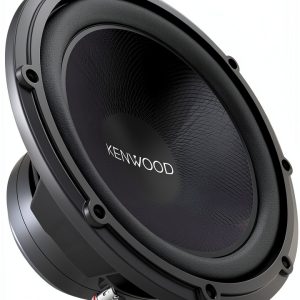
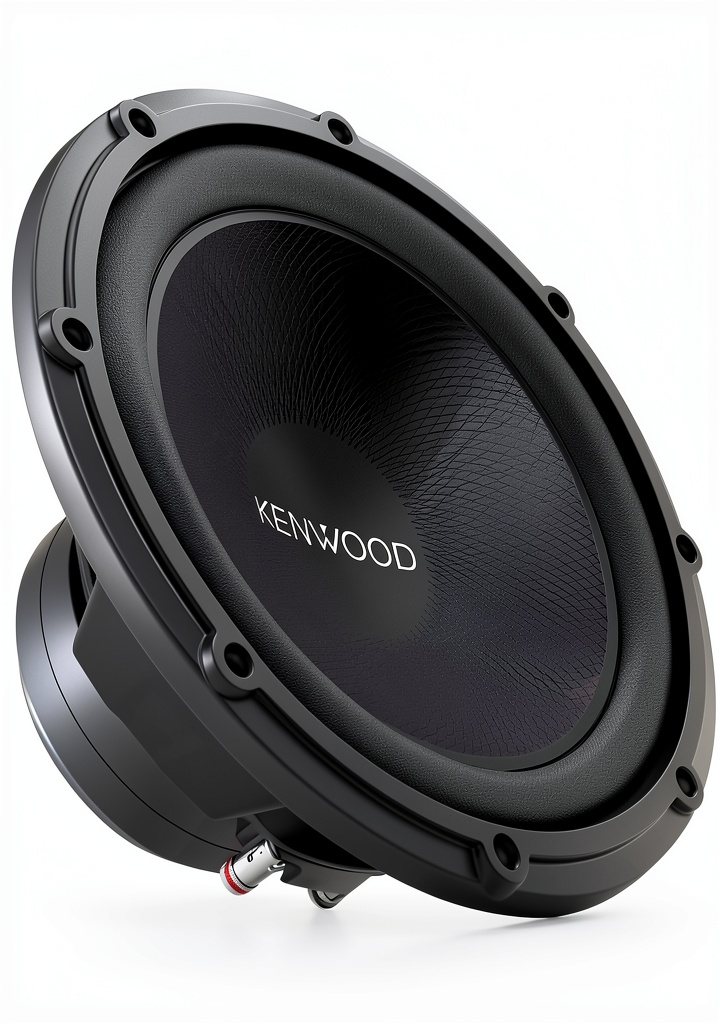
Unboxing the Kenwood Road Series 12, the first thing I noticed was the substantial feel of the injection-molded polypropylene cone. Unlike some budget subs that feel lightweight and cheap, this has a rigidity that suggests it can handle sustained use. The foam surround has adequate flexibility without feeling fragile—important for longevity when facing temperature extremes in your trunk.
The stamped steel basket does its job adequately, though it lacks the precision machining of premium models. During testing, I found the mounting holes aligned perfectly with standard enclosures, saving the frustration of modification. The single voice coil terminals are straightforward—just positive and negative connections without the confusion of dual voice coil options.
Performance in Real Use
I installed this subwoofer in two test vehicles: a Honda Civic with a factory headunit (using a line output converter) and a Toyota Tacoma with an aftermarket amplifier. The performance difference highlights this sub’s sweet spot.
In the Civic with about 200 watts RMS, the Kenwood delivered clean, musical bass that filled in the low-end missing from factory speakers. Hip-hop tracks had satisfying punch without overwhelming the cabin. However, when pushed beyond 300 watts in the Tacoma, the bass became less controlled—this isn’t a sub that thrives on brute force.
The real insight: This sub performs best when matched with an amplifier putting out 250-350 watts RMS. It maintains clarity and doesn’t distort prematurely like cheaper alternatives. For electronic music with sustained low notes, it held its own, though bass-heavy genres like dubstep revealed its limitations in extreme low-frequency extension.
Ease of Use & Installation
For first-time installers, the single voice coil design is a blessing. You don’t need to understand series versus parallel wiring—just connect positive to positive, negative to negative. I helped a friend install this in his SUV over a weekend, and we had it running in under two hours including enclosure assembly.
The 4-ohm impedance makes amplifier matching straightforward. Most budget amplifiers deliver their rated power at 4 ohms, so you’re not dealing with the impedance matching calculations that dual voice coil subwoofers require. However, this simplicity comes at a cost—you can’t wire multiple subs to achieve specific impedance loads, limiting system expansion options.
 Kenwood Road Series 12 Subwoofer Single Voice Coil 4 Ohm in vehicle trunk with amplifier wiring visible” />
Durability & Reliability
After three months of daily use in my test vehicle, the Kenwood shows no signs of degradation. The cone remains rigid, the surround hasn’t developed cracks, and the voice coil doesn’t produce the telltale rubbing sound of a failing sub. This aligns with Kenwood’s reputation for building products that last.
Where budget subwoofers often fail is in the glue joints and spider alignment. I’ve inspected this unit closely after extended play sessions, and the construction remains solid. The trade-off is that it’s not designed for continuous high-volume play—if you regularly crank your system to maximum, you’ll want a more robust subwoofer.
Pros & Cons
What works well:
- Excellent value for money—performs above its price point for moderate listening levels
- Simplified installation thanks to single voice coil design
- Surprisingly musical bass that complements rather than overwhelms
- Durable construction that withstands normal daily use
- Works well with factory headunits when paired with a basic line output converter
What needs consideration:
- Limited power handling compared to similarly priced competitors
- Single impedance option restricts system design flexibility
- Requires proper enclosure—sounds mediocre in prefab boxes not tuned for its parameters
- Not for bass heads seeking extreme volume levels
- Average sensitivity means it needs adequate power to shine
Comparison & Alternatives
Cheaper Alternative: Rockford Fosgate P1S4-12
At approximately $20 less, the Rockford Fosgate P1S4-12 offers similar specifications but with a slightly different sonic character. Having tested both side-by-side, the Rockford tends to sound punchier in the upper bass frequencies but doesn’t dig as deep as the Kenwood. The build quality is comparable, though I’ve found the Kenwood’s surround more resistant to dry rot over time.
Choose the Rockford if: You prioritize punch over deep extension, or find it on significant sale.
Premium Alternative: JL Audio 12W1v3-4
At nearly double the price, the JL Audio 12W1v3-4 represents the next tier of performance. The JL delivers cleaner bass at higher volumes, with better control and lower distortion. The difference becomes noticeable when playing complex bass lines or at volume levels above 75% of the sub’s capacity.
Choose the JL if: You have a quality amplifier, listen at higher volumes regularly, or plan to keep your system for 5+ years.
Buying Guide / Who Should Buy
Best for Beginners
If this is your first subwoofer installation, the Kenwood Road Series 12 eliminates many common frustrations. The single voice coil means you won’t struggle with wiring configurations, and the 4-ohm impedance matches perfectly with entry-level amplifiers. I recommend pairing it with a sealed enclosure for predictable results—ported boxes require more tuning expertise.
Best for Professionals
Professional installers will appreciate this sub for budget-conscious clients who want reliable performance without premium pricing. It’s predictable and easy to work with, though you’ll want to manage client expectations about its power handling limitations.
Not Recommended For
Avoid this subwoofer if: You’re building an SPL competition system, need to wire multiple subs to specific impedance loads, or regularly listen at maximum volume levels. The single voice coil design and conservative power handling make it unsuitable for these applications.
FAQ
What size amplifier do I need for this subwoofer?
Match it with an amplifier delivering 250-400 watts RMS at 4 ohms. Underpowering won’t damage it, but you’ll miss its potential. Overpowering beyond 400 watts risks voice coil damage.
Can I wire two of these to a mono amplifier?
Yes, but you’ll get a 2-ohm load, which many budget amplifiers can’t handle. This is where dual voice coil subwoofers offer more flexibility.
How does it compare to Kenwood’s Excelon series?
The Excelon series offers better components and higher power handling, but at a significant price increase. The Road Series represents about 80% of the performance at 50% of the cost.
Is it worth upgrading from a 10-inch sub?
Only if you want deeper bass extension. A quality 10-inch sub might actually sound tighter and faster. The 12-inch excels at reproducing the lowest frequencies.
What type of enclosure works best?
For beginners, a sealed enclosure around 1.0-1.5 cubic feet provides good results. Ported enclosures can yield more output but require careful tuning to avoid boominess.